Understanding viral information flow and rumors in a corporate social network

viral information flow

The following is an extract from the original article published in ‘Warwick blogs’ by the same author in March early this year, 2017.

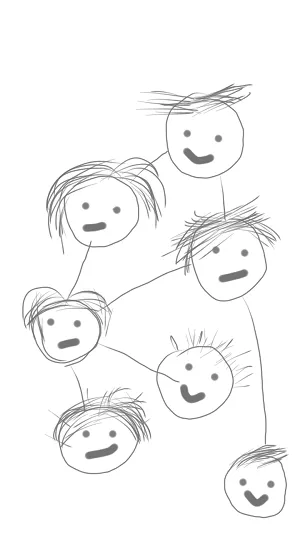
The figure is a  simple free form sketch of a viral information flow among people in a closed network. Some are happy and some are not. The sketch was drawn using ‘Sketchbook’ from Autodesk.

I just happened to search the internet on the influence of social networks and social media at workplaces. And I bumped into this article from Gallup business journal, which happens to be a gem not just from the insights that we can gain, but there is much to learn from social network experts like Dr. Jon Kleinberg.

The article that I am talking about is “The power of social networks” from Gallup business journal. You can find the link above.

The article interviews Dr. Jon Kleinberg of Cornell University. Dr. Jon is a professor of Mathematics at Cornell University and a recipient of many awards including the Rolf Nevanlinna prize.

The Rolf Nevanlinna prize (May sound new to many) is awarded by the International congress of mathematicians for outstanding contributions in the field of Mathematics aspects of computational and information science. This award is given every four years.

Now, what interested me in this article, was Dr. Jon’s expert views on information cascades and the contagion theory in the social network, that exists in the offices. Why certain messages go viral and how information flows and thrives in the social network.

I have mentioned about the fine synergistic relationship between Social media and Social network, in my earlier posts. Both exist to complement each other. The underlying structure of the social network, embedded inside the social media, makes it (Social media) more acceptable among the masses.

Social media is an ‘attitude’, it is the medium through which people interact and share information with others.

By sharing and by interacting with others, a social network is formed. We need a medium, a tool, in the form of a social media to control and better able to structure the network and fine tune it. We then leave it to be self -organizing.

We cannot enforce any strict rules on a social network. People’s behavior, ties, and connections within the network is self-regulating and self-organizing. It is like an organism which evolves continuously.

Now having said that, it needs some incentive structures to be built inside it. We need to motivate the masses.

Incentive structures and benefits should be structured in such a way, that it mobilizes people for a long-term sustainable change.

Continue reading

Adopting social media for social collaboration in workplaces-Best practices

adopting social media

Within a workplace context, the adopting social media and its usage is often termed as ‘Enterprise social networking’ or the ‘Corporate social network’.  In the recent years, a lot has been written about the benefits of using social media but little importance has been given to the science and art of its implementation and adoption within organizations.

Firstly, it is a science because the implementation goes through a set of methodical procedures starting from organizational readiness to the final measures of success.  The methods are the same as implementing any other enterprise systems in workplaces.

Secondly, it is an art because, convincing the employees and the wider organization to adopt  corporate social network with the realm of fast and dynamically changing social and political landscape is nevertheless an art form.

Social media benefits drive implementation approaches

The biggest benefit of them of all, providing the context to the information, which often questions ‘who, why and what’ of information, the challenges and pitfalls is often missing in traditional knowledge management and knowledge sharing.  This context to information, which is immediately applicable at work, is mostly tacit and hard to get.  Social media in workplaces provide the context to that information.

Another important benefit, from using social media in workplaces, is the subtle art of building social capital among project teams, the unspoken bonds of social collaboration to get things done.

To realize all these benefits by adopting social media in workplace requires a different implementation approach and which is more of bottoms up than top-down and more artsy than science.

Implementing and adopting social media in workplaces is no easy task.  Here are some best practices drawn from excellent organizations who have been front-runners in implementing social media and have realized the success adopting social media in their organizations.

Continue reading

30% of employees did not spend enough time to learn from external social collaboration – HBR Research

external social collaboration

“Ideas can be life changing. All you need to open the door is one more good idea”

The above quote is from the American author Rim Rohn.

External Social collaboration has the potential to make those small hunches and ideas worthwhile to pursue. They can develop it into a workable idea and before you know, friendly collaborators will spur you to execute it.  The intentions of utilizing external social collaboration networks are good but how much of this learning is used and diffused within the organizations? This is something we need to know. Nevertheless, there are certain principles that need following within workplaces to make idea generation fruitful for everybody.

Perhaps this is what companies are doing to spur innovation. A recent article from Harvard Business Review titled “A study shows how to find new ideas inside and outside the organization” talks about how employees in workplaces can generate new ideas by networking not only with fellow colleagues but also with experts and industry luminaries outside the organization. You can find the article here.

Big companies like Proctor and Gamble, Lego, and Bausch use employees who have the necessary skills to network externally to source ideas for them. Social media collaboration within the consumer space can be a huge help. The time and costs spent my employees’ networking and collaborating outside their workplaces sometimes outweigh the benefits of generating new ideas required for innovation.

Balance Internal and External networking

However, there is a catch. According to the findings, employees who network extensively outside the organization with their business partners, vendors, and industry experts are not necessarily productive. In addition, employees who network within their colleagues inside the organization are not completely devoid of new ideas either.  There needs to be a balance.

Senior employees within the organization, network with a range of industry experts and they spend a considerable amount of time doing this. The amount of time spent outside the organization can hamper the proceedings of the internal meetings and inputs, where their ability is required. Sometimes, time spent outside can derail the efforts of time-constrained innovation that needs to happen within the organization. It was revealing to understand that 30% employees (Respondents) do not spend the time to learn from their external social collaboration.

This means they (30% of employees) do external networking in a casual way, which may or may not add value in the end.

External collaboration and building relationships outside the organization requires a lot of time.  Learning and gaining valuable industry nitty gritty not only takes time, it is an art as well.

There is a concern that employees, who spend time externally this way, may not understand the innovation needs and priorities of their workplace in the first place.

Spending time on how to execute those ideas internally within the workplaces is equally important, if not more, feel most of the organizations. The irony is that, only when we spend time externally with counterparts outside the workplace, will we learn more from them.

Please read our blog post article, Benefits of social media in the workplace An employee perspective

The studies further point out that employees sitting at their desks all day and spending time only within their business units should not miss out opportunities to learn more from their colleagues in other units. In fact, there were more ideas generated, when employees collaborated with other employee groups. Sometimes, employees’ source of inspiration could be just right across the desk. We fail to recognize this fact.

Simple principles to follow

In such situations, how can organizations balance collaboration in external networking and internal networking?  The answers lie in the following simple principles for external social collaboration within workplaces.

Let me explain these simple principles.

The manager needs to understand the ability and skill level of the employees

It is not necessary that the all the employees need to engage in external social collaboration. It is important to understand the current organization goals, priorities, and needs. External social collaboration activities need to align with the organizational goals. Managers should encourage both internal and external social collaboration and networking. It is imperative to understand and take up that approach that works best for them.

Continue reading

Social collaboration in workplaces – Time and creativity Best Practices Part 2

Social collaboration in workplaces

This post is the part 2 of the series, Social collaboration in workplaces. You can find the part 1 here.

Today, we will talk about how social collaboration in workplaces can help in areas where with time pressure to complete the work, there is no place for creative endeavors.

“Don’t be fooled into thinking that time pressure will, in itself, spur creativity. That’s a powerful illusion but an illusion nonetheless.” These words are taken from an article in Harvard Business Review titled “Creativity under the Gun”. You can find the article here.

As the authors say at the end, it is all about dodging the bullets and bullets are a metaphor for all kinds of distractions.

With that in mind, what I would like to say is…

Do not rush creativity

Creativity needs some time to unfold. The sparks of insight that we encounter, need some time to internalize and recombine within the mind to fructify.

Research says that time bound and high-pressure jobs do not give rise to creative thinking nor new ideas.

Typically, in an organization managers give a day or two off after a task and particularly for tasks with tight deadline schedules. The fact is creative juices will not flow even after a day or two of completion. Employees often have to deal with something called the “deadline hangover” which lasts for several days. It could be because of exhaustion or post productive paralysis say some psychologists.

Continue reading

How to foster Social collaboration at work – Best practices Part 1

Social collaboration at work

Fostering social collaboration at work is an art as well as science. Whether you are a new entrepreneur or an executive in an established company, fostering social collaboration and thereby leading to innovation needs the acceptance of chaos in the initial product development stages.

It is imperative that we avoid making detailed long-term plans but instead focus on the smaller details of users or customers’ needs and wants. We have to allow managerial teams to compete with many alternative designs and projects within a framework of goals and limits to achieve the desired results.

Further, it is a common understanding and perception that small companies foster greater social collaboration at work than large companies. This is not necessarily true. However, there is a lot to learn from the managerial practices of some of the world-class companies on fostering social collaboration at work and innovation. These practices can help other companies and managerial teams to learn and be more socially collaborative.

Firstly, what is social collaboration at work ?

Social collaboration at work is a set of processes where groups of individuals interact with each other to do common goals. The interaction might also be a ‘Brainstorming’ activity where people participate and new ideas emerge out of the participation and contribution.

Continue reading

Adopting social media in workplaces – Best practice approaches 2017

Adopting social media in workplaces

Adopting social media in workplaces is both an art and a science and they both go hand in hand together. For that matter, conducting business analysis also has shades of both art and science and not much relevance is given to the ‘art’ portion of it these days.Conducting Business Analysis is a mandatory precursor and a must do exercise even before we attempt to carry out and adopt enterprise tools in workplaces.

For the benefit of some of us, the IIBA (International Institute of Business Analysis) a much-recognized body in this field, defines Business Analysis as a ‘practice to bring in a change in an organizational context by defining the needs and recommending solutions to the stakeholders’.

Fair enough! but then in the recent years, the implementation and adoption of social media tools in organizations has brought the ‘art’ portion of business analysis to the forefront. This is not to say that logical analysis and methodological rules are no less important either.

There is much written about the logical analysis and rules of implementation.  What I attempt to write below is my natural understanding of how ‘adopting social media in workplaces’ can be taken up.From a business analysis perspective and to bring in a positive productive change and intended benefits there are three approaches to adopting social media in workplaces. They are:-

  1. The all at once together approach.
  2. Phased approach.
  3. The bottoms up approach.

There are myriad tools which run inside workplaces and not all of them have the connecting power nor the acceptance among employees, as social media tools. Once they are implemented, they become a way of life inside the organization subject to their usage and popularity among the employees. Its usage builds social capital.Having said this, there are ample opportunities for people in the HR function. 

People who work as HR Generalists, HR business analysts and OD (Organizational development) consultants can intervene and learn from these exercises. Even to the extent that they can glean for information and conduct the organizational scan, which they do regularly as part of their jobs for measuring employee satisfaction levels.

Continue reading

How to reap social media benefits for SMEs ?

social media benefits for sme

Reaping social media benefits for SME’s depends on how well social media is internalized within their own organizations. We have seen and read many articles from various publications and blogs world over on how small and medium enterprises can reap social media benefits externally for business development.

By externally, I mean in the areas of digital and content marketing, advertising, understanding customer preferences, product development and website traffic boost. But little has been spoken on how social media can help organizations internally by capitalizing on its people’s connections, strength, and relationships.

Organizations, big or small need to capitalize on the connections that are available to them.

They (Organizations) come with varying business models, profit or non-profit and customer base but they all have one thing in common and that is the people.

Emphasis on people is important for realizing social media benefits

The success of social media in organizations is not about the efficient use of technology but about its people. The relationships and connections that people have can boost ideas, energy, and purpose. Such relationships can bolster the social media marketing efforts externally as well.

After all, employees are the best brand ambassadors of the company. If you keep them happy, they will spread the good word. Such goodwill is far more valuable than the exclusive digital marketing of your product on a popular social media tool.

It is important that SMEs should try and make the usage of social media a success within their own organization and showcase this to the world. Once they do it, it goes without saying, there is every chance that social media users across the world will simply love it and start adopting or engaging with their products and services.

People form strong bonds of social capital within themselves and with their work environment. Being open to their ideas, sharing tacit knowledge and genuine insight stems from this fact. Also, openly sharing, peering and acting and collaborating together, locally or globally are some of the key aspects of social media collaboration among employees.

In fact, these are fundamental to the use of social media collaboration tools. Tools like Wiki,  chat software, discussion forums and communities of practice have traditionally existed. The latest entrant in this space is the use of whiteboard collaboration where documents and diagrams can be edited in real time.

A simple case study for reaping social media benefits in an SME

To build this case and to capture the lessons learned, I would like to look at a small leadership consulting and organizational development firm called Emergent Solutions Inc. headquartered in Palo Alto in California. I would like to thank the authors of the book “social media at work” in the presenting the nuances of the challenges and issues faced by this firm.

As with any SME during the growth phase, much of the employee’s time gets buried in running the operational and transactional processes of the company. Being in the leadership consulting space, the focus had to be more on the projects, best practices, resource materials and effective customer solutions.

The organization after looking at various software finally chose the Wiki collaboration for social media collaboration among its people.

They created separate workspaces for sharing news, posting project details, best practices and ideas for improving customer solutions. They even had separate workspaces for presenting customer challenges and thought leadership discussions for seeking insight and ideas from everybody involved in the organization.

For capturing client inputs and requirements they had even set up a space for private client workspaces.

Employees were able to track their projects and present solutions to their clients on time for their consulting engagements.

The effective use of collaborative Wiki has in-fact streamlined their operational processes and they were able to focus more on other value-added consulting activities.

The company has even taken a step further, for showcasing their own collaboration success story to their clients and thereby showcasing their own global capabilities and as an effective solution partner.

A summary of lessons learned

The success of implementing a Wiki collaboration software for realizing social media benefits was largely a case of commitment and ownership among the employees. Nevertheless, there are some lessons that can be shared.

  • It is the essential to share the vision and benefits to the entire team. So that everyone understands and knows where they are headed
  • Creating effective process templates that suit the need of all the employees is important so that it encourages co-creation.
  • It is important to keep and make the implementation exercise a fun to explore and engage. People are more likely to accept and ease into the new ways of working when they are not forced.
  • Most importantly, it is important to employ a community manager or a ‘knowledge broker’ who can clean up and keep things tidy for other members to access the tool and contribute content.
  • Lastly, the founding members need to show the leadership commitment and passion. This commitment and passion will drive the commitment among their community members.

There are multiple ways that SMEs can reap benefits of social media in their organizations. As seen in the above example, business processes and customer base might vary among organizations but the central theme remains the same.

We just need to see how we can embrace social media and adopt a new mindset and also on how those technologies can yield results.

Cheers.


Garbage in garbage out, can social media in the workplace change that?

garbage in garbage out; social media in the workplace

Garbage in garbage out (GIGO) is a popular computing jargon used in enterprise computing and IT applications in large corporations across the world. Social media in the workplace has the influence to change all that with the introduction of Web 3.0.

Computer applications are designed by logical processes for transaction entry. If there is a poor data entry and the data is nonsensical, the output would also be poor and non-sensical.  Such poor and flawed data have huge implications. People believe what they see on the computers and they rely on the data for decision making.

Owing to the speed, urgency and not much care taken during the data entry in large organizations, such garbage in, garbage out is a common phenomenon. Well, social media in the workplace is set to change all of that. A more recent statement ‘Garbage in, gospel out’ might be a reality in the future.

The introduction of Web 3.0

Web 2.0 enabled us to make connections, create content and share it with our friends. It allowed us to interact with each other through multiple devices. Now with Web 3.0, the internet has become much smarter. We now call it the intelligent internet. It allows us to not just publish content on the internet in a democratized way but also mine data to suit the user’s requirements. Social media in the workplace with Web 3.0 might know the user’s preferences, analyze the meaning, and serve only pages and data which is highly relevant to the users.

You can also read out blog post article on “The global brain and graph theory”.

This affects the way, employees will create and use knowledge. Knowledge and data become more precious and they will be mined democratically where needed and when needed. Social media in the workplace will be more context dependent and context based. There will be smart interconnections among colleagues. People will start realizing the benefits and make an effort to enter the right and relevant information for future use.

Even in the consumer space, there are a number of social media tools in use. We see vandalized information all the time on some social media sites. Even the most popular ones are not left out.

Keeping this mind, the future models of social media sites with Web 3.0 would bring in more contextual information in the likes of ‘Siri’ and ‘Google’ says Cormac Reynolds from the Online marketer, a London-based digital marketing firm. You can find his website here.

‘Siri’ is a computer program for the IOS, macOS and tvOS operating systems from Apple Inc.  What appears to be the future, ‘Siri’  works as a digital personal assistant and makes recommendations and requests to other web services. Interesting !

Within large organizations, the introduction of Web 3.0 will change the ‘garbage in garbage out’ phenomenon. Knowledge generation and usage will be more dynamic, relevant and competitive within the organization. The organization becomes a ‘truly learning organization’. Learners will accelerate.

Continue reading

Social media in the workplace: Intel, a case study in a nutshell

Intel social media check list

Intel is the world’s largest semiconductor chip manufacturing company. Founded in 1968 and headquartered in Silicon Valley, California, Intel is a global company with its employees spread all over the world.  All the employees work together to make Intel, the world’s largest and a highly valued silicon chip maker company. Intel, the name stands for Integrated Electronics.

True to its name, the company has a commendable and highly integrated social media computing infrastructure and tools for use for its employees. It does not stop just at that, the important thing is social media collaboration is quite successful here.

In fact, Intel is one of the early adopters of social media which is extensively used by its employees successfully in all the functional domains of the company. From recruiting, talent management to product engineering, social media collaboration at Intel has set benchmark standards in business performance and scores high in employee satisfaction rankings.

Intel is a trailblazer in this sphere and is all set to make effective use of social media in the future.

An example business challenge at Intel

Before I jump to write about a social media collaboration example at Intel or rather a specific challenge faced by Intel Engineers, I would like to thank the authors of the book “Social media at work” who have done extensive studies and interviewing executives at world-class organizations.

The author’s study, research, and findings have culminated in writing this book.

I have referenced content from this book to write about best practices in social media usage at Intel. The book is available at Amazon. It can be found here at this link.

At Intel, solving engineering problems has been a regular challenge. The engineers use the ‘follow the sun’ model. Through this model, work gets passed on from one geographical region to another and work happens 24 hours a day.

The real challenge is the absence of asynchronous communication. An instant two-way communication which can help the engineers was missing.

This communication bottleneck had to be sorted out and they introduced social computing tools like ‘Wiki’s’ and Forum for social media collaboration. This facilitated the engineers to capture their ideas, talk in real time, record backlog history, build trust with each other and above all collaborate without hindrance.

Productivity misconceptions

Intel did have its scary moments. For example, bosses do ask their employees “When would you finish your real job?” The mixed opinion is that social media usage does hurt productivity.

Intel learned it the hard way. To face such issues, Intel integrated business problems with social media collaboration and developed a proof of concept. Social media collaboration had to be built into its core processes.

Please do read our blog post on how  Corporate social network can be made successful.

Best practices for social media collaboration at Intel

Over the years, Intel, after many rigorous exercises and lessons learned, had compiled some of its best practices for implementing and using social media collaboration in workplaces. Please find them below.

The below best practices from Intel have been referenced from the book “Social media at work”.  My sincere thanks to Arthur Jue, Jackie Alcade Marr, Mary Ellen Kassotakis, the authors of the book.

  1. It is best to implement social media tools over integrated business processes. Standalone processes need to be integrated with the rest of the core processes. It would be futile and social media usage may be not be accepted well among users, prior to this integration.
  2. The consumer use of social media is here to stay for the foreseeable future. Employees are bound to bring in outside practices, inside the organization. Open source technology is freely available.There is every chance that employees will drive the IT function for implementing social media in workplaces. We have seen it already happening. There is a need for the democratizing the usage of social media.
  3. IT departments need to be quick to recognize changes in the social media usage otherwise they are bound to face more work in the future.
  4. Allow innovation to occur in a more natural way. Grass roots development need to take place. For mass adoption, “Executive buy-in” is necessary.
  5. It is good to allow employees to have their own blogs. Blogs give employees a voice and a means of contributing their knowledge, experience, and perspectives.
  6. To get work done from the grass roots level, it is good to integrate social media into the existing business processes of the company.
  7. It is good not to force anybody in the company to adopt social media usage. Social media usage needs to be encouraged only as a good option.

Finally, the important one – Social media should be easy to use

8. The important thing is to focus on the ‘Simplicity of the tool’. The simpler the tool, the easier it is to use it. It is good to involve all representative users for a user acceptance testing. It is good to take their feedback and make relevant changes.

Intel always sees social media usage as big contributor and a key enabler of business performance. As a company, Intel is committed to integrating social media into its key processes which make the greatest impact.

Cheers.